
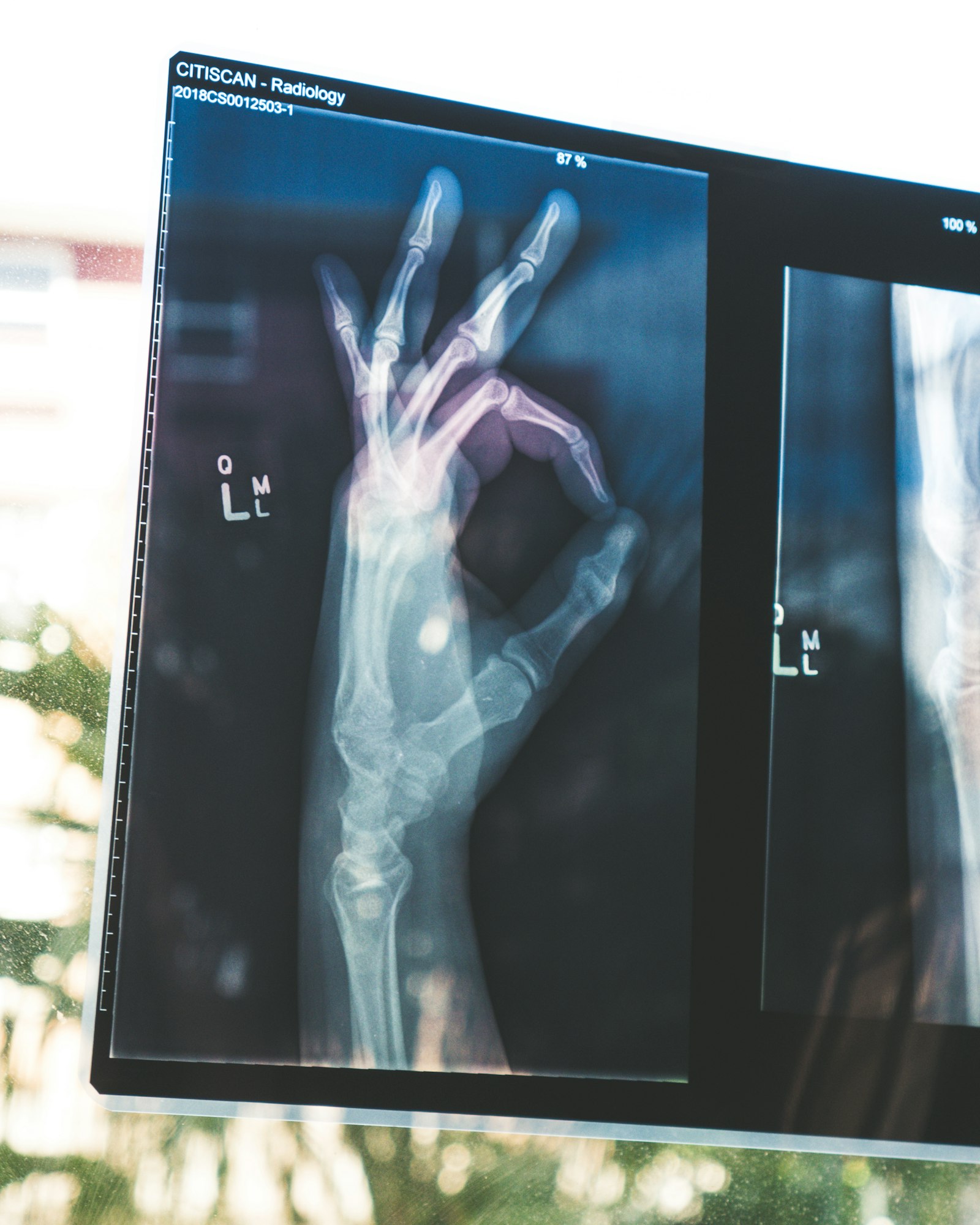
Not every broken bone in the hand needs surgery — but when it does, understanding the process can make the experience far less daunting.
When is surgery needed?
Surgery is generally considered when a fracture is:
- Displaced — the bone fragments are out of alignment and won't heal correctly in a cast alone
- Unstable — likely to shift even with splinting
- Involving a joint surface, where precise alignment affects long-term function
- Open, meaning the skin is broken over the fracture
Many stable, well-aligned fractures heal well with splinting or casting alone.
How fractures are fixed
The choice of fixation depends on the bone, the fracture pattern, and your surgeon's assessment:
- Plates and screws — a metal plate is secured across the fracture to hold it rigid while it heals. Locking plate systems, which lock the screw head to the plate, are now standard for many complex hand fractures.
- Pins (K-wires) — thin wires used for simpler fractures, often removed once healing is underway.
- External fixation — a frame outside the skin, used for severe or contaminated injuries.
What surgery day looks like
Most hand fracture surgery is done under regional or general anaesthesia as a day procedure or short admission. Imaging is reviewed beforehand, and increasingly, a 3D-printed model or computer plan may be used ahead of time for more complex fractures to map the exact approach.
Recovery timeline (general guide only)
- First 1–2 weeks: swelling control, wound care, protective splinting
- 2–6 weeks: gradual, supervised range-of-motion exercises begin, often with a hand therapist
- 6–12 weeks: strengthening as healing progresses on imaging
- Beyond 3 months: continued improvement in strength and fine motor function, particularly after more complex injuries
Every fracture and every patient is different — your surgeon will give you a timeline specific to your injury and your job or activity demands.